Karolina Adamczak
Between the flats and the gardens
(Między blokami a działkami)
2025
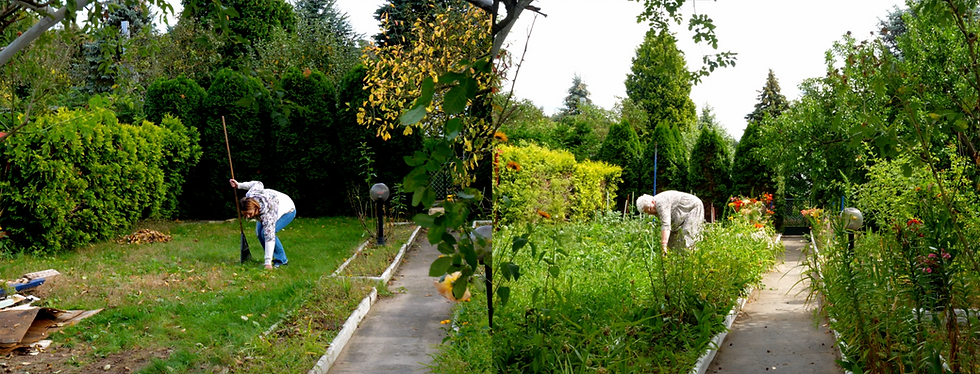


Between the flats and the gardens (Między blokami a działkami)
Two channel film, 00:32:00
Film stills
Between the Flats and the Gardens tells the story of life unfolding in Leszno, between two characteristic spaces in Poland: the prefabricated concrete block flats, a type of mass-built apartment typical since the 1960s, and the Family Allotment Gardens (Rodzinne Ogródki Działkowe ROD). These family allotment gardens are large green areas divided into individual plots, each a sizable private garden within a shared space. The gardens are separated by low fences and usually have a small cabin at the back, enabling neighbours to go about their daily lives openly, catching glimpses of each other and exchanging greetings. Beyond growing flowers, plants, fruits, and vegetables, the gardens primarily serve to provide rest, leisure, and a direct connection with nature for city residents. They are generally situated in different parts of cities, and reaching them usually involves a bike or a bus journey. The project reflects a unique way of living, in which many people divide their days between routine in the flats and leisure in the allotments. It shows how these two worlds intertwine, highlighting everything that unfolds in between: everyday moments, social bonds, and the passage of generations, emphasizing the value of memory.
The project consists of a 32-minute two-channel film and an accompanying photography series from the family archive. The film forms the central part of the work and tells the story of one family, which reflects the lives of many others. It is composed of archival material recorded over 25 years, along with new footage. It begins with the first recordings of the allotment and continues to the family’s final visit, after it had already been sold. The film opens with a journey, a passage from the flat to the allotment and from the allotment to the flat. On two sides of the screen, the spaces are placed side by side. The allotment gate and the flat door open, and the spaces begin to merge. The present blends with the past, and younger and older versions of the same people appear alongside one another. The camera observes how the space changes together with its people. Twenty-five years have passed, and generations have shifted. The child has grown up, the parents are now the same age the grandparents were in the first recordings, and the grandparents themselves have grown old and frail. The gate closes, the allotment is sold, but the memories remain and can always be revisited.


Photography window panel installation
Muzeum Osiedli Mieszkaniowych (Museum of Housing Estates), Lublin
Exhibition curator and photos, Krystian Kamiński
The photographs accompanying the film portray the same figures we see on screen, captured at different moments in life. We see the faces of grandparents, parents, and the child, portraits of three generations that together shape the history of the allotment and the flat. The photographs show family life between these two enviroments as well as the spaces that connect the two worlds: the entrance to the flats, the gate to the allotment, and the paths connecting them. The series also includes images of nature: flowers and plants that grew in the allotment over the years. Their cycle, from seed to bloom to fading, becomes a metaphor for human life: birth, growth, maturity, passing, and the traces left behind, lingering in the soil and in memory. A particular marker of this continuity are the yellow flowers growing beside the garden cabin, visible in the first photos of the allotment and still present in the final recordings after its sale. Their persistence, outlasting the family’s use of the allotment, becomes a symbol of memory that endures beyond place and people. Between the Flats and the Gardens is a story of everyday life inscribed in places, of family ties, and the cycles of life. The flat and the garden, seemingly separate worlds, form a single whole, where home stretches between them, inscribed in the journey, in daily life, and in memory. It is a story about how the spaces we live in consist not only of walls and gardens, but also of time, feelings, and people that give them meaning.
The project also situates itself within a broader social and historical context. Prefabricated housing blocks began to be built on a mass scale in Poland at the end of the 1950s, reaching their peak in the 1960s and 1970s, when the government launched a rapid housing program in response to population growth. At the same time, Family Allotment Gardens (Rodzinne ogródki działkowe, ROD) were expanding, creating places for residents of flats to relax and connect with nature. In Poland, there are approximately five thousand allotment gardens, comprising around one million plots, which are used by entire families, mainly those living in flats. The purchase of an allotment only covers its use, and the land remains the property of local authorities or cooperatives. As urbanisation progresses, gardens are becoming increasingly attractive to investors, and their liquidation may mean the loss of places where everyday life has long taken root.


First photographs of the allotment
Photographs pasted poster-style onto the market wall
Muzeum Osiedli Mieszkaniowych (Museum of Housing Estates), Lublin
Exhibition curator and photos, Krystian Kamiński

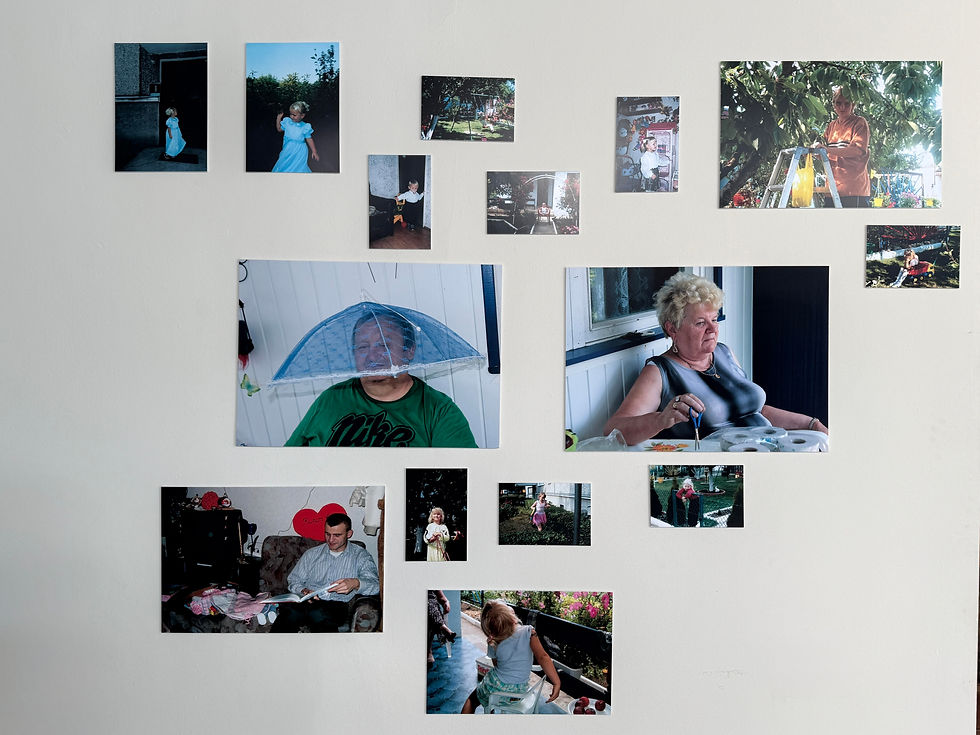

Participants: Jan Płociniczak, Eugenia Płociniczak, Bernadeta Adamczak, Leszek Adamczak
Archival footage: Jan Płociniczak, Bernadeta Adamczak
Portrait series,
Muzeum Osiedli Mieszkaniowych (Museum of Housing Estates), Lublin
Exhibition curator and photos, Krystian Kamiński